
Read also: Immigration and Crime Assessing a Conflicted Issue
Table of Contents
Introduction
Immigrant Crime as an Exaggerated Fear: The Evidence
Immigrant Crime as an Underestimated Problem: Evidence and Practical Considerations
Federal Immigration Law Enforcement: Procedures and Complaints
Controlling Immigrant Crime: The Challenge Ahead
End Notes and Bibliography
Introduction
In recent years it has become difficult to avoid perceiving immigrants, legal or not, as overwhelming this country with serious crime. The case of Rafael Resendez-Ramirez, an illegal Mexican drifter, seems to have crystallized public fears. Ramirez, wanted in an FBI manhunt in the brutal murders of at least eight people near railroad tracks in Texas, Kentucky, and Illinois, surrendered himself to Texas Rangers at a border crossing near El Paso in July 1999. What especially aroused public ire was not just the magnitude of Ramirez's crimes, but that he previously had been in federal custody. A check with the Immigration and Naturalization Service's Border Patrol computer identification files showed he was a repeat offender who reentered the U.S. after three deportations, and who voluntarily returned to Mexico at least nine times following apprehensions. In fact, four of the murders took place in the weeks following his release by the U.S. Border Patrol back to Mexico. Ramirez eventually pled guilty in Texas state court on multiple murder charges, and at his own request, received the death penalty. He currently is awaiting execution.
Tracking down dangerous criminals often meets with far less success. A 1998 Washington Post article revealed that District of Columbia police had been unable to resolve two dozen homicide cases because the suspects had fled to their native El Salvador to avoid prosecution. These cases represented nearly two-thirds of the department's 37 outstanding warrants for slaying suspects.1 A recent book by independent journalist Robert I. Friedman, meanwhile, revealed a network of ruthless Russian immigrants, based mainly in Brooklyn, N.Y., have built since the 1970s what amounts to a shadow world superpower. They are deeply involved on a global basis in such activities as prostitution, heroin smuggling, money-laundering, and stock fraud, and have committed dozens of murders against those persons including fellow mobsters getting in their way. Friedman had good reason to fear publishing his findings; numerous investigative journalists also have been murdered.2
Anecdotes, though numerous and damning, can explain only so much. Supporters of keeping U.S. immigration at high levels argue, with apparently convincing evidence, that immigrants as a whole are no more crime-prone than the native-born. Yet such an appraisal invites an age-old question: What's wrong with this picture? How is that the foreign-born as a whole, according to several studies, represent no statistical anomaly, yet so much other evidence indicates they are responsible for a wave of individual and organized crime? The explanation, this report argues, is that much of the crime, a lot more than structured studies would suggest, isn't being reported. For one thing, immigrants are victims of crimes committed by fellow immigrants (all the more likely to be hidden from view if the assailant is a family member or close relative), and are often too scared, bound by custom, or fearful of deportation. This tendency may be heightened by the insularity of certain immigrant cultures, especially where concentrated in low-income neighborhoods. Many foreign-born criminals either hide within our nation's borders or operate outside of them. And the FBI's crime figures reflect state and local crime reports, which often omit any mention of an offender's national identity.
This report attempts to establish an understanding of the difficulties in identifying and combating crimes committed by immigrants. The purpose is not to create an "immigrant scare." Immigrants are crime victims as well as criminals. There is a long, ignominious tradition in this nation (not to mention others) of violence toward newcomers. In recent years more than ever immigrants who enter America illegally are at the mercy of unscrupulous and sadistic smugglers, and many die in boxcars or ships before arriving here. Others, in order to "work off" their debt to their smugglers, become slaves all but in name, and are subject to extortion, forced prostitution, and sweatshop jobs, often tricked by their ethnic compatriots into doing so.
But this reality should not undercut concern over the crimes immigrants commit. States with large immigrant populations, such as California and New York, have had to devote an enormous portion of their law enforcement and criminal justice budgets to investigating, apprehending, and incarcerating immigrants to ensure safety for the law-abiding. The federal government since the mid-1990s has stepped up funding of state and local efforts for this purpose. That many of the immigrants committing crimes entered here illegally (or overstayed their visas) adds fuel to the fire.3
Given that the flow of illegal immigration shows little or no sign of slowing, further federalization of crime control, for better or worse, appears to be a fixture on the long-term horizon. As such, proposals for reforming the Immigration and Naturalization Service may be at best of limited benefit. In the final analysis, the most effective way of controlling immigrant crime is to better enforce entry and visa time limits, alter the main basis for legal entry from family reunification to employment skills, and lower the overall immigration ceiling.
Immigrant Crime as an Exaggerated Fear: The Evidence
Immigrant Crime as a Stereotype
Immigrant crime, and widespread fear of it, has had a long history in this country. For well over a century newcomers have brought with them a criminal element who, however unrepresentative of their nationalities, have turned their communities into zones of lawlessness. Often, members of a particular ethnic group have preyed upon other groups, whether or not of the same nationality. Prior to the 1920s Jewish gangsters in New York frequently terrorized strikers into returning to work, and picked pockets on crowded streets. Italians operated extortion rings in San Francisco and prostitution houses in Chicago. Small grocery owners combined the legitimate and illegitimate by doubling as loan sharks, preying on the inability of immigrant workers to obtain credit through normal channels.4 Groups such as the Mafia, the Chinese Triads, and various Mexican and Central American drug cartels established control over the sale and distribution of goods and services, both legal and illegal.
Researchers and observers, aware that widespread concern over crime committed by immigrants can boil over into hate crimes committed against them, rarely hesitate to note that the majority of immigrants are law-abiding. Often, they go further, adding that immigrants commit fewer crimes than the native-born. A 1997 paper jointly sponsored by the Carnegie Endowment for International Peace and the Urban Institute typifies this view:5
Few stereotypes of immigrants are as enduring, or have been proven so categorically false over literally decades of research, as the notion that immigrants are disproportionately likely to engage in criminal activity(If anything) immigrants are disproportionately unlikely to be criminal.
It might surprise many just how many decades back this view dates.6 In 1901 a federal entity, known as the Industrial Commission, issued a "Special Report on General Statistics of Immigration and the Foreign-Born," observing that foreign-born whites were less oriented toward crime than native whites. A decade later, in 1911, another federal panel, the Immigration Commission, released its own study. "No satisfactory evidence," the report said, "has yet been produced to show that immigration has resulted in an increase in crime disproportionate to the increase in adult population. Such figures as are presented indicate that immigration has not increased the volume of crime to a distinguishable extent, if at all. In fact, the figures seem to show a contrary result." During the Hoover years, yet another federal commission, the National Commission on Law Observance and Enforcement, collected data on crime and arrest statistics in 52 cities. The results, the commission's 1931 report concluded, "seem to disagree radically with the popular belief that a high percentage [of crime] may be ascribed to the 'alien.' " Local data for Los Angeles in the early decades of the 20th century also failed to show a pattern of immigrants committing excessive amounts of crime.7
Recent Research
In the 1980s and 1990s researchers have concluded, or at least have lent support to the conclusion, that immigrants commit proportionately no more than and possibly even fewer crimes than native-born citizens. The General Accounting Office, analyzing FBI records, found that foreign-born individuals accounted for about 19 percent of the total arrests in 1985 in six selected major cities.8 The foreign-born represented 19.6 percent of the aggregate population. While "foreign-born" can mean refer to citizens as well as aliens,9 the study makes an implicit case that immigrant crime is in line with the rest of the country.
Kristin Butcher of Boston College and Anne Morrison Piehl of Harvard's Kennedy School of Government, using 1980 and 1990 Census Public Use Microdata Samples, found that among men aged 18-40 immigrants were less likely to be in correctional institutions than the native-born.10 If native-born men had the institutionalization rates of immigrants with the same demographic traits, the former's institutionalized population would be only two-thirds the current size. The authors added that immigrants who had arrived at an earlier point in time were more likely to be in prison than recent entrants. This stood in contrast to the prevailing view of labor economists that earlier immigrants were more successful, and hence less likely to see crime as a substitute for gainful employment.
Butcher and Piehl conducted a separate study of several dozen U.S. metropolitan areas.11 Using data from the FBI Uniform Crime Reports and the Census Bureau's Current Population Survey, the authors found recent immigrants had no significant effect either on crime rates or the change in rates over time. In a secondary analysis of individual data from the National Longitudinal Survey of Youth, youths born abroad were significantly less likely than native-born youths to be criminally active.
John Hagan of the University of Toronto and Alberto Palloni of the University of Wisconsin also found a weak link between immigration and crime.12 Examining criminal justice data in two U.S. border cities, El Paso and San Diego, Hagan and Palloni argued immigrants are disproportionately represented among prison inmates because of biases in processes that lead from pre-trial detention to sentencing. The criminal justice system views immigrants as potential "flight risks," they noted, and thus detains many suspects who otherwise (as citizens) would not be detained. The authors concluded that incarceration rates, depending on the national origin of the criminal, exaggerate by anywhere from three to seven times the crime rates of immigrants relative to citizens.
INS data, recently made available at the request of the House and Senate Appropriations subcommittees that fund the agency's budget, show a lower recidivism rate for immigrants. Of the 35,318 criminal aliens INS released from custody (but not did not deport) during October 1994 and May 1999 there were 11,605 who went on to commit new crimes. This recidivism (repeat offender) rate of 37 percent was well below the 66 percent figure for the U.S. criminal population for the comparable period.13 This discrepancy did not dissuade Rep. Hal Rogers, R-Ky., and Sen. Judd Gregg, R-N.H., the respective subcommittee chairmen, from pointing to the data as evidence of INS's incompetence and disregard for public safety; Rogers' response was particularly harsh. Yet neither refuted the existence of the gap in recidivism.
Immigrant Crime as an Underestimated Problem: Evidence and Practical Considerations
The Meta-Issue: The Veil of Secrecy
Immigration enthusiasts might be prone to use such research as evidence that widespread fear of immigrant crime is an irrational, if understandable, response to sensationalized anecdotes.14 But such a view may be hasty in its own right. Many immigrant crimes are not reported, and possibly in greater proportion than the crimes that the U.S.-born commit. Many victims of immigrant criminals fear reporting crimes to the police because their victimizers are of the same nationality, and thus are more likely to retaliate in ways that would dissuade the victim from calling police.
This is especially true with immigrant crime rings. As illegal economic activity, organized crime requires an unusually high level of trust to maintain a veil of secrecy from police and mob rivals alike. A common language and experience, apart from the larger American one, can link such people. "Criminals," writes immigration critic Peter Brimelow, "prefer to deal with co-conspirators they understand and trust in economist-speak, it reduces their transaction costs. And such tightly-knit groups, operating in a foreign and sometimes obscure language, are notoriously difficult for the police to penetrate."15 This is why for many decades newcomer ethnic groups from all parts of the world, in varying types and locations, each have set up their own versions of the Mafia. These organizations could be seen, at least initially, as ethnic protection societies, providing members with jobs, housing, and other necessities. But their dominance in exerting informal social and economic control over immigrants enabled leaders to successfully coerce business rivals and community members.
A special report released in 1990, based on the Justice Department's National Crime Victimization Survey, which annually samples about 100,000 persons aged 12 and over in roughly 50,000 U.S. households, suggests underreporting among Hispanics, the nation's largest ethnic grouping, occurs often and more so than among non-Hispanics. While it is true "Hispanics" is a far from perfect proxy for "immigrants," not the least of the reasons being that many Hispanics are native-born, the data show significant differences. During the period 1979-86 Hispanics failed to report crimes of all types at a rate nearly twice the rate that they did report; even for violent crimes alone the unreported offenses outnumbered the reported ones. The violent crime victimization rate for Hispanics also exceeded that for non-Hispanics, 39.6 versus 35.3 offenses per 1,000 households, with household crime (burglary, larceny, vehicle theft) showing the greatest discrepancy, 265.6 versus 204.5 crimes per 1,000 households.16
Police confirm the tendency to underreport. In Memphis, Police Sgt. L. A. Currin estimates that because Hispanic immigrants are reluctant to come forward, hundreds of robberies each year go unreported. "They don't think they have certain rights," said Currin. "We are not Immigration [and Naturalization Service]. Our concern is whether a crime was committed."17 Often, robbers, believing immigrants are in the U.S. illegally, assume they don't have bank accounts and thus carry around a lot of cash. Thus, it is not simply group cultural norms, but also fear of government reprisal, that drives underreporting. Though an increasing number of urban police departments, including Memphis's, have begun outreach services to Hispanic, Asian, and other immigrant communities and have hired more bilingual officers, this fear remains alive and well.
"A Family Matter"
An especially ominous reason for underreporting is that what most Americans would call crime many immigrants consider to be tradition, or if a crime, a "family matter" not requiring outside interference. In this view, police are not supposed to supplant patriarchal authority in resolving disputes, however evident that the "conflict" in question is a case of prey needing protection from predator. Sometimes this can have tragic consequences. In Washington, D.C., for example, a Vietnamese family failed to report to authorities the repeated sexual molestation of their child by another adult member of their community. The family only complained after the predator murdered the child. When police, through an interpreter, asked the parents why they did not report the sexual abuse, they replied it is customary in their culture not to call upon strangers to settle delicate family problems.18 A young woman from Singapore recalled at a 1999 conference on domestic violence in Boston that back in her native country no one not family members or neighbors ever questioned her parents' and uncle's use of beatings and rape as a way to discipline her, an aunt, and a grandfather: "We rallied not for the victim but for the batterer. We'd say, Yeah, hit her because she was disobedient." That comment came in the context of a report by the Massachusetts Governor's Commission on Domestic Violence that found the state's outreach efforts on domestic violence hadn't reached refugees and immigrants, who have a greater incidence of family violence.19
In a bitterly ironic note, a Nigerian woman who investigated child abuse complaints for the City of New York was arrested in 1999 along with her husband and charged with forcing a Nigerian girl into servitude for nine years. Federal investigators also noted the couple and several relatives had forced two other Nigerian girls into servitude. In the first instance, the couple had lured a 14-year-old girl into coming to the U.S. to attend trade school and become a seamstress. Shortly thereafter, they terrorized her into working as a maid and a babysitter in their house. The couple seized the girl's passport, forbade her to speak to anyone outside the family, barred her from using the phone, threatened to deport her and harm her family, and beat her when she disobeyed orders. At age 22, while being beaten for requesting her freedom, neighbors overheard her screams and called the police; an anonymous tip led the FBI into the picture later on. The couple at their arraignment in federal court denied mistreating the girl.20
Cases such as these are far more common than imagined. Each year, according to a 1999 report by the Central Intelligence Agency, between 45,000 and 50,000 women and children are trafficked as slaves into the United States from Asia, Europe, Latin America, India, and Africa.21 One might ask: Why don't immigrant victims report these crimes? How could they tolerate serving as slaves all but in name? Aside from the extensively diagnosed general tendency of victims to blame themselves for violence inflicted upon them,22 immigrants in particular often have a difficult time shaking the perception that local police are connected to immigration authorities. A young Mexican woman named Maria, for example, moved to the Dallas area in 1992 and the next year met the man who would become her husband. He routinely abused her, but she was reluctant to call police because she feared deportation; the husband was a legal U.S. resident, and Maria was not. The final straw was when her husband used electrical cables to shock her, then locked her and their daughter in his workshop. She broke through the back door, took her daughter and fled to a women's shelter.23 Another Mexican woman in El Paso, whose first name was Laura, was beaten repeatedly for four years by her husband until her arms and legs were black and blue. At one point, her husband pointed a gun at her and told her if she ever left him, he'd keep their young twins, and have her deported. Finally, she came to a shelter. As with the case of Maria, Laura did not have permanent legal resident status, but her husband did.24 "Many of these women had poor experiences with the police in their own countries," noted a Dallas police sergeant with the domestic crimes unit. "They equate us with the INS. That I don't like. We're not Immigration, and their [immigration] status is of no relevance to whether we will help them."25 The fear women in situations like these feel is made worse given their lack of money when they leave (more accurately, flee) their husbands; without money, an attorney may be the furthest thing from their minds.
Safe Harbors Outside the U.S.
If immigrant crime victims are reluctant to come forward to police, immigrant criminals often know how to make themselves scarce, and not necessarily by remaining or even operating within the U.S. A large portion of ethnic crime in this country can be linked to international networks. "Hundreds of thousands of people are being moved globally by highly organized criminal enterprises operating on all continents," noted Robert Perito, director of the State Department's Office of International Criminal Justice a few years ago. "Their primary target is the United States."26
It would seem many of these criminals are hitting the mark. That slavery has been illegal in this country for almost a century and a half has not deterred certain immigrant groups from reintroducing it. A few years ago a Mexican immigrant couple was arrested for enslaving a large number of their deaf countrymen in a ring with operations in New York, Chicago, Los Angeles, Dallas, Arizona, North Carolina, and South Carolina.27 The Chinese operate what observers are calling a "new slave trade" in the U.S.28 Among certain nationalities fraud is woven into the economic culture. Telephone fraud has run rampant among some immigrant groups; one estimate several years ago put the cost of long-distance scams to U.S. phone companies and customers nearly $2 billion a year.29 One Secret Service agent characterized the problem of credit-card fraud among Nigerians as "absolutely epidemic." U.S. officials started keeping records in this area by ethnic group in 1989; by a half-decade later, they had arrested more than 1,000 Nigerians.30
A new kind of credit card scam, involving hand-held "skimmers," is an up-and-coming practice among immigrant theft rings. The crook, often a restaurant waiter, swipes a credit card through the skimmer, usually disguised as a pager or worn inside a jacket, and stores data embedded inside the magnetic security stripe. It is possible to transmit hundreds of stolen card numbers via e-mail to card cloning mills run by Latin American, Asian, Russian, and Nigerian crime syndicates. Consumers have to go through an involved process to get unauthorized charges removed, while card issuers pass along the costs anyway in the form of higher interest rates and fees. "It's not unusual," noted Gregory Regan, head of the Secret Service's financial-crimes division, "to see a card compromised in New York City or Washington and the numbers used overseas, in Taiwan, Japan or Europe, within 24 to 48 hours."31
To an extent, crime rings are based somewhere else and expand here rather than vice versa. Criminal gangs operating out of Poland and the Czech Republic recently have developed close ties to mobsters in Chicago and New York.32 Much of the Russian mob's activity is run directly from Moscow, with the Russian government all but a rubber stamp for gangsters. Russian-based gangsters, and their local chieftains in more than a dozen American cities, have infiltrated Wall Street brokerages, the Bank of New York, the Medicare program, and even the National Hockey League to commit massive scams. Rep. Jim Leach, R-Iowa, chairman of the House Banking Committee, has estimated that billions of dollars have been laundered out of Russia through U.S.-based Russian mobsters since 1995, and that dozens of Western banks have been used as conduits for the money. Russian mobsters also have set up shell companies in the Brighton Beach area of Brooklyn, N.Y., to sponsor U.S. visas for fellow criminals or hire sophisticated money managers and lawyers in Los Angeles and Denver to invest in import-export companies.33 Asian crime lords in the 1990s aggressively recruited immigrants to the U.S. to serve as their foot soldiers.34 Even where organized immigrant crime consists of local gangs, it can be a potent force. In 1992 INS formed a 120-member Violent Gang Task Force; within a few years task force agents were arresting some 2,000 legal and illegal immigrants annually.35
Other Factors
The Mexican Commute
Yet another reason for underreporting lies in the fact that criminals from other countries, almost inevitably Mexico, cross over the border to commit crime and then return home to escape prosecution. Police officials in the San Diego area have complained that organized groups from Mexico cross over from Tijuana and commit robberies in middle-income neighborhoods. Indeed, criminal activity along the U.S.-Mexican border in San Diego County led local officials in the 1980s to conduct a study of arrest rates according to legal status. In the City of San Diego 26 percent of all burglary arrests and 12 percent of all felony arrests involved illegal aliens, who are estimated to comprise less than 4 percent of the total city population.36
Incomplete Record-Keeping
Immigrant crime also may be underestimated because local law enforcement officials do not keep records on the national origin of the perpetrator. In Dana Point, an affluent Orange County, Calif., coastal community experiencing a wave of immigrant-related crime, a sheriff's officer noted that in a recent year that suburb had three murders, three rapes, 232 vehicle burglaries, 181 residential burglaries, and 108 commercial burglaries. Asked whether he had an ethnic breakdown on these numbers, he replied, "We won't touch that."37 That kind of local policy, especially in larger cities, explains why data based on the FBI's Uniform Crime Reports can explain only so much. While UCR Index is consistent across U.S. cities, and takes account of the most serious offenses, it doesn't measure drug dealing, simple assaults, fraud, vandalism, and weapons violations, among other crimes. Nor given the reluctance of localities to break down crimes by race and ethnicity, does it collect data on that basis either. Butcher and Piehl admit, "Using the UCR may cause us to overlook some important types of crime."38
Neighborhood Ecology
Some researchers believe underreporting is due in part to the tendency of low-income immigrants to settle in low-income neighborhoods that is, the kinds of neighborhoods more likely than others to be beset with crime. University of Chicago sociologist Robert J. Sampson and colleagues explained high rates of crime in certain Chicago neighborhoods as attributable to a lack of "collective efficacy" on the part of residents. That is, neighbors lacked the social cohesion to intervene on behalf of one another in an emergency. The ethnic and linguistic heterogeneity in neighborhoods with a high concentration of immigrants impedes this mutual trust.39 There is also a reinforcing process at work; that is, the reputation of a neighborhood as rampant with crime may inhibit collective efficacy. The area becomes a less attractive place to live, and thus invites a criminal element which otherwise might suspect their behavior is more closely monitored.40
The Second Generation
Even if immigrants are no more prone to commit crimes than are citizens, this tendency may not necessarily hold true for their offspring, who are American-born or at least residents of the U.S. from early childhood. Criminologists in this country long have theorized that the second, more than the first, generation of an immigrant population is likely to drift into crime. The first generation, having braved all kinds of hardship to enter the U.S., found it necessary to defer gratification in the interest of long-term success. But the second generation, though often as poor as their parents upon arrival, has less perspective on the Old World from which their parents came, and often in response develops an attachment to deviant subcultures, such as gangs, as a wayward continuation of the "old-fashioned" European peasant societies of their parents.41 Joining delinquent subcultures can be a way for the second generation to resist acculturation into the mainstream of the new country. The aforementioned federal commission reports of 1901, 1911, and 1931 each observed that the children of immigrants are more predisposed toward crime than their parents.42
The phenomenon of crime among the second generation of the post-1965 immigration liberalization law is recent, and as such has not produced a large body of research. But local law enforcement officials around the nation are all too aware of Hispanic, Asian, and other youth gangs whose members largely were born in the U.S. or were brought here as very young children. In suburban Northern Virginia outside Washington, D.C., police estimate that about 20 to 30 ethnic gangs, with a combined total of more than 2,000 members, have been responsible for dozens of recent attacks involving the use of machetes and baseball bats. Some 600 youths in Fairfax County alone have ties to Mara Salvatrucha, a notorious Los Angeles-based gang (founded in the 1980s by El Salvadoran nationals) responsible for what likely have been hundreds of slayings nationwide over the past decade.43
California State University, Chico, sociologist Tony Waters recently did a full-scale analysis of second-generation immigrant crime, comparing data on selected recent ethnic groups of today with data on certain groups of the early 20th century. The results suggest that the problems brought by high immigration levels can have a substantial echo effect.44 Waters found that second-generation immigrant crime differs widely across nationalities. The key element is the presence or absence of a large proportion of young males. Ethnic groups with high proportions of young males, all things held equal, have a bigger crime problem, although neighborhood ethnic heterogeneity, poverty rates, and other factors do exert influence as well. In the case of Laotians the time lag between migration to the emergence of youth crime was only about five to 10 years, significantly shorter than, for example, Molokan (Russian) immigrants of the 1920s. Table 1 shows the divergence in serious crime rates Waters found among Asian second-generation youth in California in the early 1990s.
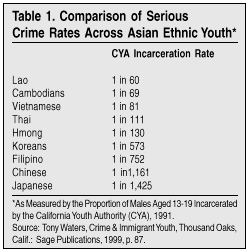
Waters is pessimistic that police can do much, beyond traditional means of law enforcement, to stem second-generation youth crime, as it is rooted primarily in the parent-child relationships that prevail within a given national culture. So long as youthful crime is foremost a product of a high-birthrate community, policies to acculturate such a community, will make only modest inroads into reducing crime. "The only way to 'control' youthful crime in immigrant groups," Waters notes, "is to adopt policies that are inconsistent with a modern economy or to control/segregate immigrants in a fashion inconsistent with the basic principles of civil rights. This could include limiting the immigration of spouses. I must reluctantly conclude that little can be done to prevent outbreaks of youthful crime among immigrant populations."45
Some recent European studies also indicate a second-generation crime problem. Dresden University criminologist Hans-Jorg Albrecht found that while first-generation immigrant guest workers had crime rates comparable to those of Germans, second and third generations had substantially higher rates. Foreigners accounted for 25 percent of the prison population in 1994, while in youth correctional facilities the figure stood at 50 percent; in pretrial detention the share of foreigners in many regions reached as high as two-thirds.46
Federal Immigration Law Enforcement: Procedures and Complaints
An Overview of the INS
Law enforcement and criminal justice, as they apply to the foreign-born as well as the native-born, are mainly the provinces of state and local government. But the federal role, led by the Immigration and Naturalization Service (INS), part of the Justice Department, has been growing over time. This country since 1917 has had some kind of framework for removing criminal aliens; in 1925 Congress established the U.S. Border Patrol to provide a means of arresting aliens who attempt to enter illegally. The current state of the art in dealing with the problem consists of provisions inserted into various crime and immigration legislation over the last few decades. Under current law the INS is authorized to deport aliens convicted of "aggravated felonies" violent, property, or drug crimes that are punishable by prison sentence of at least one year, whether or not such a sentence was imposed or served. The INS enforcement process typically begins when the agency's investigators identify potentially deportable aliens within the federal, state, or local justice systems. Because of limited resources, INS tends to avoid pursuing aliens who are released on probation or a suspended sentence; instead the agency focuses on persons nearing the end of a prison sentence.
Once an alien has served his time as with citizens, most do so in state rather than federal prison INS detains that person and begins proceedings through its Institutional Hearing Program (IHP) to determine his or her deportation status. If after a certain length of time INS determines either that the alien is deportable or that further investigation is needed, the agency places a "hold" on that person. If the INS determines the alien poses no threat to the public, it releases that person. If, on the other hand, the INS issues a deportation order, the criminal alien is entitled to contest the decision.47 At the hearing, the alien may present various grounds for immunity, including political asylum and extreme family hardship. The potential deportee may appeal an adverse ruling through the Department of Justice, the federal courts and, finally, the Supreme Court. If an alien has been deported for a felony, he may not reenter. If he is caught reentering, he is subject to a prison sentence of up to 20 years.48 A conviction is usually assured unless the defendant is in the country lawfully. The INS usually identifies returned felons through a computerized database of thumbprints from well over 2 million deportees.
Even where immigrants have not committed a crime, INS performs a key gatekeeper role in the naturalization process. All immigrants applying for citizenship must fill out an application requiring them to list any prior arrests or convictions, and swear under oath that the information is true and complete. They also must have their fingerprints taken. Until fairly recently, it was common for INS to deny citizenship on the grounds that lying about one's criminal record was a demonstration of poor moral character. Pressure from mass-immigration groups, however, has all but eliminated this explanation as a basis for rejection.
More Deportations in the Face of More Crime
In the face of high rates of immigrant crime, at least in certain states and cities, the logical impulse is to demand INS remove more criminals. But the reality is that INS is deporting criminal aliens at a record pace. During fiscal years 1993-2000 the number of INS removals (deportations plus exclusions)49 more than quadrupled from 42,469 to 181,572, while removals related to criminal offenses grew two and a half times from 27,827 to 69,093 (see Table 2). By contrast, in fiscal 1984 the agency removed only about a thousand aliens on criminal grounds.50 In any given year for the 1993-98 period Mexicans accounted for far more than half of all removals (see Table 3).
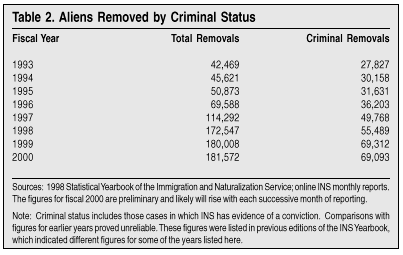
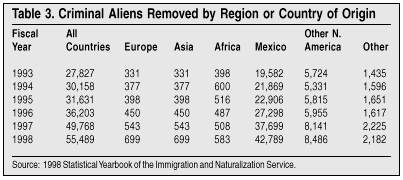
There are several reasons for the huge jump in removals. First, and most obviously, the federal government has put a high priority on the removal of aliens. INS Commissioner Doris Meissner in Senate testimony last March pointed to "identify and remove criminal aliens and minimize recidivism" as the top agenda item in her agency's Interior Enforcement Strategy.51 Toward this end, INS in recent years has pressed Congress for more funding for state and local detention bed spaces, juvenile bed spaces, air transportation for aliens to detention space and removal from the U.S.
Second, and related to the first, state governments, as they must pay for prosecuting and incarcerating criminal aliens, have secured large amounts of federal support through the 1994 Violent Crime Control and Law Enforcement Act. The act initially authorized $1.2 billion for specialized enforcement provisions, including border control, criminal alien deportation, asylum reform, and a criminal alien tracking center. The law also authorized another nearly $500 million to reimburse states and localities for the cost of incarcerating aliens. The availability of federal aid has induced many states, especially along the Mexican border, to develop programs to reduce illegal entry, deter the employment of illegal immigrants, and improve crime-fighting abilities.52 This has fostered closer cooperation between states and INS on deportation strategies. A criminal alien's first contact with INS usually occurs while in state prison. Through an enhanced Institutional Hearing Program, states work closely with INS to start deportation proceedings before immigrants are released. The INS also has developed programs to screen the populations of jails in major metropolitan areas to identify offenders who may never be sentenced to prison, but who are subject to deportation.
Third, INS has developed and implemented early-release programs pursuant to the Illegal Immigration Reform and Immigrant Responsibility Act of 1996. The law authorizes INS to deport nonviolent offenders who were otherwise not eligible for early release when such removal "is appropriate and in the best interest" of the U.S. or the respective state of incarceration. Several states, including Florida and New York, have special programs that single out foreign-born inmates to receive clemency or early parole in exchange for immediate deportation.53 These early-release programs augment state prison programs for inmates generally, in which time served in prison is shorter than the sentence reflected in court records.
Fourth, Congress over the years has broadened the range of deportable offenses. Current removal statistics include any alien who has been convicted of a crime in the United States, even if the deportation or exclusion order is not based on the criminal conviction that resulted in the sentence. A "criminal alien" now can be so classified on grounds that he entered without proper inspection. The federal government's war on drugs, though not intentionally directed at immigrants, since the 1980s has had the effect of putting many in prison. Laws over the years have stiffened penalties for violations involving controlled substances. Butcher and Piehl concluded that immigrants were disproportionately incarcerated for drug-related crimes.54
Fifth, many aliens who are arrested for deportable offenses are hardly first-timers in the criminal justice system. In fact, in a number of cases, they already had been deported, reentered the U.S., and committed another crime. The General Accounting Office in a mid-1980s analysis of 200 cases in the New York City area found that among aliens arrested for such offenses, 77 percent had been arrested at least once before, 45 percent at least twice, and 11 percent five or more times. Among aliens convicted after being identified as potentially deportable, 44 percent had been convicted at least once, 23 percent more than once and 3 percent five or more times. Six percent of these aliens had been deported as criminal aliens, returned to the United States and were rearrested at least once after returning; 5 percent had been deported twice and were rearrested at least once after their second return.55 In its mid-1980s six-city study the GAO analyzed FBI criminal history records on 165 deported criminal aliens, and found 56 had reentered the U.S. at least once and had come into contact with the criminal justice system. These 56 aliens collectively accounted for 152 deportations, 122 reentries, and 260 arrests.56 A 1992 report to Congress indicated that INS agents encountered and arrested 461 previously deported criminal aliens who had re-entered the U.S. in fiscal 1991. Senate investigative staff, however, believed the re-entry figure was far higher because many criminals travel back and forth across the U.S.-Mexican border with impunity.57
Obstacles to Deportation: Foreign Governments
It is a mark of the severity of the immigrant crime problem that it may have gotten worse despite the sharp upswing since the mid-1980s in arrests, convictions, and deportations. Common sense would dictate the focus should be on removing obstacles to deportation. These hurdles have rightfully drawn much attention, especially as they intertwine immigration with foreign policy.
One obstacle is that immigrant criminals continue their life of crime in their native country. Foreign diplomats report that criminal activity among recent deportees is "a major factor" or "the main reason" for sharply rising crime rates throughout Central America and the Caribbean.58 Taylor and Aleinikoff observe:
The growing presence of U.S. gangs in El Salvador (and to a lesser extent throughout the region) is perhaps the most visible example. The Salvadoran Civilian National Police force, which was rebuilt from scratch as part of the 1992 peace accord, simply does not have the training or equipment to stem the tide of violent crime that is sweeping the country. As criminal alien deportations increase, the sheer numbers can overwhelm the already insufficient law enforcement capabilities of many receiving countries.
It's not hard to understand why the governments of El Salvador and elsewhere are reluctant to take back their criminal aliens who come to the U.S. Indeed, foreign governments have created measures of their own to impede INS removal efforts. Some, such as Cuba, Laos, and Vietnam, flatly refuse to take back their criminals, making the U.S. the government by default of effectively stateless alien criminals. Israel is unusual in that it refuses to extradite its citizens, a major problem since many top-echelon Russian-Jewish organized crime figures in the U.S. and elsewhere have become Israeli citizens.59 Foreign non-cooperation explains why the 1980 boatlift from Cuba's Port of Mariel had such a devastating long-run impact on this country. As many as 40,000 criminals, many dumped by the Castro government, entered the U.S. by way of the South Florida coast.60 Immune to repatriation, these immigrants, a large portion of them hardened criminals, settled in Florida or scattered about the U.S. to ply their trade. In Elizabeth, N.J. some 600 of the several thousand Mariel refugees who settled in the city later were arrested for felonies. In nearby Union City, N.J., these aliens committed about one-third of all felonies in the mid-1980s. And in Las Vegas, law enforcement officials estimated about one-fourth of all Cuban refugees in the city were career criminals.61
Most nations do not have an explicit policy of refusal to take back criminals. But any number of them have devised ways to make the process more lengthy and costly for the INS.62 First, these countries often stall in verifying the identity of potential deportees. Second, they delay in securing travel documents. Finally, they may link criminal alien deportations to ongoing negotiations over extradition treaties. Each of these actions raises the cost of detention until the final deportation order, and possibly frustrates INS out of issuing the order in the first place.
Obstacles to Deportation: Domestic Politics
However fitfully, INS has managed to stem a large amount of potential immigrant crime. But as immigration, legal and illegal, reached record-high levels during the 1990s, meeting its responsibilities has grown more difficult. To be sure, it is a large agency, with an enormous range of activities now costing more than $4 billion a year combined. By the end of fiscal year 2000 there were some 32,000 INS employees, twice as many as when Bill Clinton became president. Of that figure, 9,212 served as Border Patrol agents, more than double the FY 1993 total of 3,965.63 Trying to identify, apprehend, and remove some 6 million illegal immigrants, whose net numbers increase annually by 275,000,64 is a daunting enough task. Yet despite increases in money and manpower, federal, state, and local law enforcement officials still argue that the INS and other federal law enforcement agencies lack the sufficient tools.
That may well be true, at least under current immigration law. But INS in particular has structural weaknesses that need reform regardless of its funding levels. For one thing, like any number of federal agencies, INS can fall prey to intense politicization. Rarely was this more pronounced than during 1996, when enforcement in several district offices all but broke down. Separate investigations by Congress, the General Accounting Office, and the Justice Department, as summarized in a chapter of David Schippers recent book, Sellout: The Inside Story of President Clinton's Impeachment,65 revealed the Clinton White House had intimidated INS officials into speeding up the naturalization process for hundreds of thousands of aliens, a sizeable portion of whom were felons, in the months before the 1996 election.
Exploding Workloads, Inadequate Resources
INS has encountered substantial criticism over the years to the effect that the right hand doesn't know what the left hand is doing. Sen. William Roth, R-Del., summarizing a subcommittee report in 1993, noted that in addition to lacking sufficient resources to combat immigrant crime, the agency often made ineffective use of the resources available to it. The computer system, he said, seemed "totally inadequate to the task." Worse, he noted, was the labyrinth of procedures INS had to follow in order to deport someone, procedures so time-consuming and filled with loopholes that criminal aliens could stay in the U.S. for years while they appeal their cases.66 The crime act of 1994 and the immigration act two years later did address some of these problems, but the reality remains that INS is a bureaucracy bound by cumbersome rules.
Whether one sees INS's shortcomings as due to external influence or internal inefficiency, the agency has often has fallen short of its mission of removing alien criminals. Recent reports by the General Accounting Office indicate the agency's efforts to identify and remove imprisoned aliens need improvement. In a 1997 report, based on a sample of some 17,000 inmates, the GAO estimated INS in fiscal 1995 released nearly 2,000 criminal aliens into U.S. communities without a prior determination of risk they posed to public safety. INS, upon GAO request, found that 23 percent of a sample of 635 criminal aliens had been rearrested for crimes, including 183 felonies. The INS did not complete the Institutional Hearing Program process for the majority of criminal aliens released from federal and five state prisons in the second half of FY 1995. The INS database in 1995 did not have records on about a third of foreign-born released inmates. The report cited a shortage of qualified agents the attrition rate for INS enforcement agents was about 30 percent, much higher than the 11 percent for INS staff and resistance from certain states to cooperate fully in the IHP process as major explanations for the problems.67
The GAO issued a follow-up report in 1998 analyzing data on more than 19,000 individuals in the custody of either four populous states or the U.S. Bureau of Prisons, and identified as foreign-born and released from prisons during January 1 through June 30, 1997. This report showed INS and the Executive Office for Immigration Review did not have records on 7,144, or 36 percent, of these persons. Of that portion, 1,903, or 27 percent, were potentially deportable aliens and about 1,200 of that latter figure were aggravated felons. Breaking the sample down further, 80 of these criminal aliens already had been rearrested. On a more positive note, of the 12,495 potentially deportable cases for which INS did have records, more than 90 percent were removed from the U.S. within one month of prison release, something the GAO also found two years earlier.68 Yet a large portion of criminal aliens released to INS did not have final deportation orders at the time, something contributing toward higher detention costs (see Table 4).
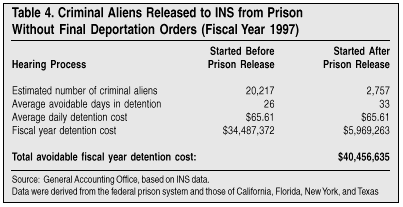
The Immigration and Naturalization Service's main problem is its exploding workload. That is why despite its successes, the immigrant crime problem paradoxically seems every bit as intractable as it did two decades ago. Despite having expanded authority and funding to track down, arrest, and remove felons, INS is swimming upstream. The pressure to constantly do much more with limited resources has taken a toll on Border Patrol agents; since the mid-1990s the patrol's annual attrition rate has doubled from around 5 percent to 10 percent.69 The INS faces increasing pressures to loosen admissions and citizenship standards, especially from ethnic and other organizations that tend to be allied with the Democratic Party. What the agency needs is a smaller workload, not simply more administrators and law-enforcement agents. This, unfortunately, is something that requires the political will to initiate major changes in laws governing admissions eligibility.
Controlling Immigrant Crime: The Challenge Ahead
"Reform INS": A Familiar Refrain
In the last two decades some 15 million immigrants have entered our country to live, with a current backlog of some two million awaiting naturalization. Most resident aliens are not criminals, and most future immigrants will not turn out to be criminals either. But many are, and it is the responsibility of the federal government, working with states and localities, to deport those who are criminals as quickly as possible, barring unusual circumstances.
Calls by members of Congress and other critics to "reform INS" are legion. But there are realistic limits as to how much can be accomplished so long as basic immigration policies remain intact. The INS is a bureaucracy bound by statutory mandate. Whatever the agency can do to secure more funding and legal authority, it can do no more than what Congress allows it to do. Reorganizing INS to perform its functions more efficiently will have only limited effect, in lieu of action on the part of Congress to reduce immigration. A number of critics of INS have proposed splitting the agency into separate admissions and enforcement components. Rep. Rogers of Kentucky remarked on the need for this following the release of INS crime data by his subcommittee in March 2000. While campaigning last June President George W. Bush recommended similar action, calling for an associate attorney general to head each agency.70 But beyond symbolism, it is uncertain how effective this reorganization would be. It would leave the agency with a limited capacity to investigate, arrest, and remove criminals. A split INS bureaucracy may result in inconsistencies in data collection and other operations. Worse, the agency would have an implicitly schizophrenic mission, with the service portion of the agency placing out a welcome mat at the same time the enforcement section wields a heavy stick.
Controlling the "Uncontrollable"
The greatest challenge facing INS is what it can't control namely, the currently allowable levels of immigration, and by extension, the illegal entry and visa overstays these levels invite. The current annual legal immigration level of close to one million, not to mention hundreds of thousands of "temporary" admissions, has placed a strain on the agency's capacity to fulfill its basic mission. Statutory retroactive amnesty has made things worse. The 1986 Immigration Reform and Control Act granted general amnesty (legal resident status) to illegal immigrants who could prove they were in the U.S. on or before December 31, 1981, or to certain farm workers; more than 2.8 million aliens subsequently received amnesty over the following several years.71 President Clinton, after threatening to veto the fiscal 2001 budget deal unless more than a million extra immigrants were allowed a chance of becoming legal residents, agreed last fall to an immigration package that will help roughly half that many.72 But even a half-measure for blanket amnesty would seem to invite crime. Unconditional amnesty rests on the premise that immigrants, skilled or not, are an asset to the nation. The new provision likely will further undermine INS's authority to enforce the law, and require ever-rising levels of necessary federal intrusion into state and local law enforcement functions.
The main challenge is to discourage entry and residence by criminals without treating all immigrants as though they were criminals. Beyond more thorough law enforcement, Congress needs to change the main basis of entry from family reunification to education and job skills and reduce annual legal immigration ceilings. Canada in 1994 did both; there is no reason why the U.S. cannot do likewise.
Employment Skills as a Brake on Crime
Admitting mainly skilled immigrants would to some extent act as a de facto brake on immigrant crime. There is no mystery in this. The very process of acquiring and building skills appeals to a person willing to forgo the short-term gratification crime provides; someone who has taken years to become educated and employable at a high level of responsibility is typically not the sort of person who will see crime as a short-cut to riches. By contrast, a career criminal, often having a short time horizon, will view education and training as a diversion from "real" moneymaking ventures. From his standpoint, it makes little sense to spend months, let alone years, gaining skills to acquire the good things in life that can be acquired through force or stealth.73 To require a college degree and requisite skills likely would produce the unintended benefit of locking out many career criminals.
The criminal element can be seen as the paramount example of what economist and cultural historian Thomas Sowell terms "negative human capital." Human capital is a process by which people, whether acting as individuals, communities, nations, or civilizations, transmit a complex set of cultural values from one generation to the next. It is less economic assets than knowledge that creates wealth; two ethnic groups in a similar geographic setting can have vastly differing outcomes based on the accumulation of knowledge and the values that enable knowledge to flourish.74 People who commit crimes, or raise children who do the same, are in a sense robbing a nation of its capital just as surely as those who engage in productive, legal enterprise are building capital. Harvard labor economist George Borjas has used this idea of human capital to advocate a shift in immigration policy that favors newcomers who have tangible employment skills.75 Though ethnic groups do differ in the types of skills they lend to a particular culture, a skills-based immigration policy need not invoke ethnic exclusion. It rests on the premise that admitting people with economic skills would serve this nation better in the long run than admitting people without economic skills.
But let us understand that making employment skills the main basis for immigration is not sufficient to deter crime. Many immigrants already come here literate, gainfully employed and knee-deep in crime. "Many of today's foremost Russian mobsters have Ph.D.s in mathematics, engineering, or physics, helping them to acquire an expertise in advanced encryption and computer technology," writes Robert Friedman.76 Some mobsters bluntly admit that their purpose in coming here is to get rich by any means, legal or not.77 Written testimony before Congress in 1987 on the impact of the Mariel boatlift immigrants on South Florida described these people this way: "They generally possess education and skill levels above the average for those remaining in Cuba and about the same as those who arrived in the 1970s."78 To be sure, not all or even most of the refugees were criminals, but the boatlift contained an alarming number of people who were. Butcher and Piehl found that the most recent foreign-born, though doing less well in the labor market, committed fewer crimes relative to earlier immigrants compared to the native-born.79
Restrict Immigration, Legal and Illegal
Congress must restrict the number of immigrants who may enter this nation legally in a given year to make major headway in crime control. Such action most likely would reduce immigrant crime in proportional as well as absolute numbers. In other words, a smaller percentage of immigrants at any given time would be involved in crime. This is because high levels of legal immigration act as a spur for high levels of illegal immigration80 and it is members of the latter category, by definition already lawbreakers, who have the least to lose by committing felonies.
If lowering legal levels also triggers a drop in illegal entries, an overworked INS may be better able to enforce immigration laws, especially as it concerns the growing problem of illegal incursions from across the Mexican border. Border Patrol officials have cracked down on such entries in the mid-1990s, successfully, in the key urban entry points of San Diego and El Paso.81 But the effect of restricting entry in key selected locations has produced a "balloon effect," in which a large portion of illegal entries occur elsewhere in sparsely populated areas. "Cut down the flow of illegals in El Paso or San Diego," observes anthropologist Glynn Custred, "and it moves to places like Douglas [Ariz.] and from there to ranch lands and even deeper into the desert beyond."82 Indeed, as Custred noted, in the first six months of 2000 U.S. Border Patrol agents apprehended 176,655 illegal aliens in the 21-mile Douglas section of the border alone. Much of the incentive to enter is encouraged by smugglers now charging $1,500 a head. To combat the problem the Border Patrol is building up to 1,300 miles of road and installing fences, surveillance cameras, and thousands of stadium-style lights along the border in order to combat drug traffickers, thieves, and undocumented aliens from entering.83
While such actions require support, there is no substitute in the long run for action on the one thing that can drive down illegal immigration: Less legal immigration. This means not only lowering annual ceilings, but resisting calls for an expansion of general amnesty for the foreign-born, the latter of which induces more illegal immigration. Until such action is taken, potential illegal entrants (including visa overstays) will view expanded amnesty as a case of "when" rather than "if."
A Clear Message
That most immigrants live within the law is neither disputable nor enlightening. Most native-born Americans aren't criminals either. But though we cannot deport or keep out citizens, we can apply the principle of exclusion to immigrants. It is a matter of public safety that immigrants with a history of felony arrests and convictions in their native countries are kept out of the U.S., and those who commit crimes here are removed and kept outside our borders. It is a triumph of hope over experience to imagine that a career criminal will exhibit a capacity for self-reform if coaxed to try harder. The criminal does not view human relations through the same prism that non-criminals do. The gangster who runs credit-card and cigarette tax scams, the mob enforcer, the wife beater who invokes "tradition" and uses his spouse's immigrant status to keep her in line for them, crime is a vehicle to exalt an inflated sense of infallibility. They are predators, and most people instinctively avoid challenging them because they do not want to be prey. Predators do not change without intensive therapy, and even then the odds are against it.84 The United States can ill afford to serve as the world's crime control and rehabilitation center. It is a message we ought to be sending other nations, as we keep doors open to the law-abiding only.
End Notes
1Avis Thomas-Lester, "Salvadoran Fugitives Frustrate Police," The Washington Post, July 18, 1998.
2 Robert I. Friedman, Red Mafiya: How the Russian Mob Has Invaded America, Boston: Little, Brown, 2000.
3 It should be noted that about 95 percent of all non-citizens admitted to this country each year are not immigrants, but tourists, business persons, students, and other persons who do not arrive with the intent of living here. The term "immigrant" refers only to those persons who come to live here, but who are not (or not yet) citizens. It does not include immigrants who are naturalized citizens.
4 See John Bodnar, The Transplanted: A History of Immigrants in Urban America, Bloomington, Ind.: University of Indiana Press, 1985, p. 132.
5 "Immigration and the Justice System," Research Perspectives on Migration, July/August 1997, Vol. 1, No. 5, Washington, D.C.: Carnegie Endowment for International Peace and the Urban Institute, p. 2.
6 For a discussion of these early studies, see ibid., pp. 4-5; also Michael Tonry, ed., Ethnicity, Crime and Immigration: Comparative and Cross-National Perspectives, Chicago: University of Chicago Press, 1997, Introduction, pp. 20-21.
7 Cited in Thomas Muller, Immigrants and the American City, New York: New York University Press, 1993, p. 214.
8 U.S. General Accounting Office, Criminal Aliens: INS Enforcement Activities, GAO/GGD-88-3, November 10, 1987. The six cities in question were Chicago, Denver, Houston, Los Angeles, Miami and New York.
9 The Census Bureau estimated at the time that aliens represented about 50 percent of foreign-born Americans. See "Criminal Aliens: INS Enforcement," statement of Lowell Dodge, GAO Director of Administration of Justice Issues, before the House Committee on the Judiciary, Subcommittee on Immigration, Refugees and International Law, Washington, D.C.: U.S. General Accounting Office, November 1, 1989, p. 4.
10 Kristin F. Butcher and Anne Morrison Piehl, "Recent Immigrants: Unexpected Implications for Crime and Incarceration," Working Paper 6067, Cambridge, Mass.: National Bureau of Economic Research, June 1997. This study (same title) also appears in Industrial and Labor Relations Review, Vol. 51, No. 4, July 1998, pp. 654-79.
11 Kristin F. Butcher and Anne Morrison Piehl, "Cross-City Evidence on the Relationship Between Immigration and Crime," Journal of Policy Analysis and Management, Vol. 17, No. 3, 1998, pp. 457-93.
12 John Hagan and Alberto Palloni, "Immigration and Crime in the United States," in The Immigration Debate: Studies on the Economic, Demographic, and Fiscal Effects of Immigration, James P. Smith and Barry Edmonston, eds., Washington, D.C.: National Academy Press, 1998, pp. 367-87. Significantly, as border cities, El Paso and San Diego were less than representative of local criminal justice systems elsewhere in the U.S. This point is made in "Immigration and the Justice System," pp. 11-12.
13 The INS admitted that it was unable to perform estimates on the total number of crimes because the records of one-third of those released were not available through the FBI's criminal tracking system.
14For a good example of this syndrome, see various essays in Juan F. Perea, ed., Immigrants Out! The New Nativism and the Anti-Immigrant Impulse in the United States, New York: New York University Press, 1997.
15 Peter Brimelow, Alien Nation: Common Sense About America's Immigration Disaster, New York: Random House, 1995, p. 185.
16 Lisa Bastian, Hispanic Victims, Washington, D.C.: U.S. Department of Justice, Bureau of Justice Statistics, Special Report, January 1990.
17 Jasmine Kripalani, "Hispanics Unlikely to Report Crime, Police Say," Memphis Commercial Appeal, August 7, 2000.
18 "Immigration and the Justice System," p. 8.
19 Doris Sue Wong, "Gaps Seen in Help for Abused Immigrants," Boston Globe, June 23, 1999.
20 David Rohde, "Couple Charged with Holding Girl in Servitude," The New York Times, July 15, 1999.
21 Cited in Amy Klein, "Alleged Slavery in Detroit Area Reflects Disturbing Global Trend," Detroit Free Press, August 10, 2000.
22 For good summaries, see J.L. Barkas, Victims, New York: Scribners, 1978; M. A. Douglas, "The Battered Woman Syndrome," in Domestic Violence on Trial: Psychological and Legal Dimensions of Family Violence, D.J. Sonkin, ed., New York: Springer, 1987, pp. 39-54; and Jennifer Freyd, Betrayal Trauma: The Logic of Forgetting Child Abuse, Cambridge, Mass.: Harvard University Press, 1996.
23 Thomas Huang, "Immigrant Women Can Face Added Barriers When Trying to Escape from Abusive Spouses," Dallas Morning News, August 20, 1998.
24 Michelle Koidin, "Lawyers Confront Immigration Dilemma," Associated Press, July 2, 1999.
25 Huang, "Immigrant Women..."
26 Quoted in "Immigrants and Crime," Washington, D.C.: Federation for American Immigration Reform, 1997.
27 "Mexican Immigrant Couple Arrested in Smuggling Ring," The Washington Post, August 16, 1997.
28 "The New Slave Trade," Newsweek, June 21, 1993.
29 "Phone Card Fraud Flourishes Among Recent Immigrants," Los Angeles Times, April 8, 1993.
30 "They Take Plastic," Worth, March 1994. Nigerian immigrants have presented an especially thorny crime problem in the U.S. In 1993 David Simcox, writing in Social Contract magazine, reported U.S. law enforcement officials estimate about 75 percent of the 100,000 Nigerians by then in this country were involved in "an impressive and innovative variety of fraud schemes." This is a remarkable figure, but it may seem less so in the context of that nation's indigenous political culture. A 1997 international survey ranked Nigeria as the most corrupt country in the world. See Barbara Crosette, "Survey Ranks Nigeria as Most Corrupt Nation," The New York Times, August 3, 1997.
31 See Elaine Shannon, "A New Credit-Card Scam," Time, June 5, 2000, p. 54. Regan believes the real take in this scam is a good deal higher than an industry estimate of $125 million for 1999.
32 Saskia Sassen, Guests and Aliens, New York: The New Press, 1999, p. 115.
33 Friedman, Red Mafiya, pp. 218-19.
34 "Death on the Spot," Newsweek, December 13, 1993.
35 FAIR, "Immigrants and Crime."
36 Susan Pennell and Christine Curtis, "The Impact of Undocumented Aliens on the Criminal Justice System," draft paper, San Diego Association of Governments, October 1986.
37 Dale Maharidge, The Coming White Minority: California's Eruptions and America's Future , New York: Times Books, 1996. Interestingly, almost none of the crimes occurred within the city's growing number of gated residential communities. This suggests that a lot more immigrant crime would be occurring if the opportunities were more available. Dana Point had been the focus of a lot of countywide tension following the murder of a white teenager by Hispanic gang members and the murder of an Asian gang member by several of his own kind.
38 Butcher and Piehl, "Cross-City Evidence," p. 461.
39 Robert J. Sampson, Stephen W. Raudenbush, and Felton Earls, "Neighborhoods and Violent Crime: A Multilevel Study of Collective Efficacy," Science, Vol. 277, August 15, 1997, pp. 918-24.
40 See Wesley G. Skogan, Disorder and Decline: Crime and the Spiral of Decay in American Neighborhoods, New York: Free Press, 1990; James Q. Wilson and George Kelling, "Making Neighborhoods Safe," The Atlantic Monthly, February 1989, pp. 46-52.
41 This is the classic view held by Clifford Shaw and Henry McKay, Juvenile Delinquency and Urban Areas, Chicago: University of Chicago Press, 1942 (rev. ed., 1969).
42 "Immigration and the Justice System," pp. 4-5; Michael Tonry, Introduction, Ethnicity, Crime, and Immigration, pp. 20-21.
43 Josh White, "Attacks Raise Fears of Rise of Va. Gangs," The Washington Post, November 20, 2000.
44 Tony Waters, Crime & Immigrant Youth, Thousand Oaks, Calif.: Sage Publications, 1999.
45Ibid., p. 202.
46 Hans-Jorg Albrecht, "Ethnic Minorities, Crime, and Criminal Justice in Germany," in Tonry, Ethnicity, Crime, and Immigration, pp. 31-99.
47 The 1994 Violent Crime Control and Law Enforcement Act authorized the use of administrative removals, thus bypassing a required court hearing for aliens not lawfully admitted for permanent residence who were convicted of an aggravated felony, but were not eligible for relief from removal. There is no doubt this has removed a lot of bottlenecks in the deportation process.
48 In practice, the average sentence for reentry is 60 months (five years), according to the U.S. Attorney in Utah, David Schwendiman, who spearheaded a successful crackdown in immigrant crime in that state. Brian Maffly, "Increased Staffing Accounts for Leap in Prosecution of Illegally Returning Felons," Salt Lake Tribune, July 29, 1998.
49 Formally, most removals of illegal immigrants fall under what the INS classifies as "voluntary removals with safeguards." Under this arrangement, the alien admits to his illegal status and agrees to leave the country. Virtually all these cases involve Mexican border jumpers. A deportation occurs when the alien does not admit to illegal status or is not offered the option; in such cases, INS places the alien under "docket control" and prepares a file on that person for potential use in a hearing.
50Statistical Yearbook of the Immigration and Naturalization Service, annually, and other INS sources. See also Margaret H. Taylor and T. Alexander Aleinikoff, Deportation of Criminal Aliens: A Geopolitical Perspective, Washington, D.C.: Inter-American Dialogue, 1998, p. 1.
51 Testimony of Commissioner Doris Meissner, Immigration and Naturalization Service, before the U.S. Senate, Committee on Appropriations, Subcommittee on Commerce, Justice, State, and the Judiciary concerning the President's FY 2001 Budget Request, March 7, 2000, p. 10.
52 See U.S. Department of Justice, National Institute of Justice, "Crime & Illegal Immigration: Emerging Local, State & Federal Partnerships," National Institute of Justice Journal, June 1997, p. 6.
53 These early-release programs are in addition to the standard time-credit and good-behavior guidelines that states have for prisoners generally. This explains why for immigrants, as well as citizens, actual time served is often far less than the sentence indicated in court records. As a result of these sentence-reduction mechanisms, state prison inmates on average serve 38 percent of their total sentence. See U.S. Department of Justice, Bureau of Justice Statistics Bulletin, NCJ-163391, Felony Sentences in State Courts, 1994, January 1997.
54 Kristin F. Butcher and Anne Morrison Piehl, "The Role of Deportation in the Incarceration of Immigrants," in Issues in the Economics of Immigration, George J. Borjas, ed., Chicago: University of Chicago Press, 2000, pp. 351-85. Interestingly, the authors admitted (p. 354) that they excluded from the data "lifers" those immigrants in for murder because they do not have determinate sentences. It is precisely such criminals, however, that give most cause for concern.
55 U.S. General Accounting Office, Criminal Aliens: INS's Investigative Efforts in the New York City Area, GAO/GGD-86-58BR, March 1986.
56 U.S. General Accounting Office, Criminal Aliens: INS Enforcement Activities.
57 U.S. Senate, Committee on Governmental Affairs, Permanent Subcommittee on Investigations, Hearing on Criminal Aliens in the United States, Staff Statement, November 10, 1993, p. 25.
58 Taylor and Aleinikoff, p. 8.
59 Friedman, Red Mafiya, p. 277-78. Israeli police officials estimate that Russian-Jewish mobsters have poured more than $4 billion into Israel's economy, though estimates range as high as $20 billion.
60 See Muller, Immigrants and the American City, p. 214. Not all immigrants from the boatlift were criminals. The boatlift was an outgrowth of a three-way dispute between Cuba, the U.S., and Peru over the right of some 3,500 dissident Cubans to seek asylum in the Peruvian Embassy in Havana. The U.S. agreed to accept the dissidents if they first went to Costa Rica. Castro responded that anyone who wished to leave his country could, but had to go directly to the United States. The initial wave of flotillas received extensive media coverage, inducing Cuban exiles in the Miami area to charter boats and (in violation of U.S. law) pick up family, relatives, and friends in Cuba. In a relatively short time some 125,000 Cubans had arrived in Key West and other South Florida points. The Carter administration was in a double bind. On one hand it wanted to aid those escaping an enemy nation, but on the other hand officials realized the result was chaos. About two weeks after the exodus began there were reports that Castro was using the crisis to empty his prisons and mental institutions. At that point popular support for the boatlift cooled, and Carter officials imposed fines and seized vessels. See Roger Daniels, Coming to America: A History of Immigration and Ethnicity in American Life, New York: HarperCollins, 1990 (paperback ed., 1991), p. 347.
61 "In retrospect," argues Muller, "the acceptance of these criminals ranks as one of the most ill-conceived decisions of the Carter administration." (ibid., p. 215). For a detailed look at the impact of the Mariel boatlift on Dade County and elsewhere in Florida, see U.S. Senate, Committee on Governmental Affairs, Illegal Alien Felons: A Federal Responsibility, Hearing Before the Subcommittee on Federal Spending, Budget, and Accounting, One Hundredth Congress, First Session, March 12, 1987, Washington, D.C.: U.S. Government Printing Office, 1988.
62Taylor and Aleinikoff, "Deportation of Criminal Aliens," p. 9.
63 U.S. General Accounting Office, Border Patrol Hiring: Despite Recent Initiatives, Fiscal Year 1999 Hiring Goal Was Not Met, GAO/GGD-00-39, December 1999, p. 7; James Pinkerton, "1,708 New Agents Help Beef Up Force for the U.S. Border Patrol," Houston Chronicle, November 17, 2000. The latest round of hiring came from a pool of a record-high 91,000 applicants and employed $2,000 signing bonuses to lure applicants.
64 U.S. Department of Justice, Crime & Illegal Immigration, p. 3.
65 David P. Schippers with Alan P. Henry, Sellout: The Inside Story of President Clinton's Impeachment, Washington, D.C.: Regnery, 2000, see pp. 37-49. This information may also be found at , in the Center for Immigration Studies' Backgrounder excerpted from the book. Schippers served as chief counsel to the House Managers impeachment trial. The administration's pressuring of INS to relax naturalization requirements in order to pad Democrat voting strength would have become part of the articles of impeachment were it not for the arrival of the referral from Independent Counsel Kenneth Starr before Schippers could develop more evidence and interview witnesses.
66U.S. Senate, Hearing on Criminal Aliens in the United States, pp. 2-3.
67 U.S. General Accounting Office, Criminal Aliens: INS Efforts to Identify and Remove Imprisoned Aliens Need to be Improved, Statement of Norman J. Rabkin, Director, Administration of Justice Issues, General Government Division, GAO/T-GGD-97-154, July 15, 1997.
68 U.S. General Accounting Office, Criminal Aliens: INS Efforts to Remove Imprisoned Aliens Continue to Need Improvement, GAO/GGD-99-3, October 1998; See also statement on this report by Norman J. Rabkin, GAO/T-GGD-99-47, February 25, 1999.
69 See U.S. General Accounting Office, Border Patrol Hiring, p. 7.
70 Terry M. Neal, "Bush Proposes Splitting Duties of INS," Washington Post, June 27, 2000. Significantly, Bush unveiled his proposal in a speech before the national convention of the League of United Latin American Citizens, or LULAC, in Washington. He made clear his intent to step up federal outreach efforts to Hispanics. The speech focused less on the INS's basic function of enforcing our borders than on finding ways to provide a more user-friendly way of welcoming new arrivals.
71 The total figure as of the summer of 2000 was 2,829,655. But this figure does not include immigrants who have benefitted from other forms of Congressionally-granted amnesties. Taking these into account, the grand total of amnesties was 4,055,805. See "The Amnesty Tote Board," FAIR Immigration Report, July/August 2000, p. 5.
72In the original administration proposal, immigrants from El Salvador, Guatemala, Haiti, and Honduras would enjoy the same amnesty provisions as those now enjoyed by nationals from Nicaragua and Cuba.
73 See Stanton Samenow, Inside the Criminal Mind, New York: Times Books, 1984, pp. 67-93; William Tucker, Vigilante: The Backlash Against Crime in America, Briarcliff Manor, N.Y.: Stein and Day, 1985, pp. 173-96.
74 Thomas Sowell, Conquests and Cultures: An International History, New York: Basic Books, 1998, pp. 334-41.
75 George J. Borjas, Heaven's Door: Immigration Policy and the American Economy, Princeton, N.J.: Princeton University Press, 1999.
76 Friedman, Red Mafiya, p. xviii. The author on the same page quotes a senior Treasury Department official: "Hell, it took them about a week to figure out how to counterfeit the $100 Super Note," unveiled in 1997 as "tamper-proof."
77A police detective in Brighton Beach (Brooklyn) puts it this way: "The Russian gangsters have told me that they've come here to suck our country dry." See Friedman, ibid., p. 286.
78Written testimony by Janet Reno, Florida State Attorney General, in Illegal Alien Felons: A Federal Responsibility, p. 61.
79 Butcher and Piehl, "Recent Immigrants."
80 See Mark Krikorian, "Legal and Illegal Immigration," The New York Post, February 26, 1997.
81 See Glynn Custred, "Alien Crossings," The American Spectator, October 2000, pp. 38-43, especially pp. 39-40.
82Ibid., p. 40.
83 Dane Schiller, "Patrol Pushes Border Defense," San Antonio Express-News, October 6, 2000.
84 Samenow, Inside the Criminal Mind, pp. 95-137.
Bibliography
Ahlbrecht, Hans-Jorg. "Ethnic Minorities, Crime, and Criminal Justice in Germany," in Ethnicity, Crime, and Immigration: Comparative and Cross-National Perspectives, Michael Tonry, ed., Chicago: University of Chicago Press, 1997, pp. 31-99.
"Amnesty Tote Board," FAIR Immigration Report, July/August 2000.
Barkas, J.L. Victims, New York: Scribner’s 1978.
Bastian, Lisa. Hispanic Victims, Washington, D.C.: U.S. Department of Justice, Bureau of Justice Statistics, Special Report, January 1990.
Bodnar, John. The Transplanted: A History of Immigrants in Urban America, Bloomington, Ind.: University of Indiana Press, 1985.
Borjas, George J. Heaven’s Door: Immigration Policy and the American Economy, Princeton, N.J.: Princeton University Press, 1999.
Brimelow, Peter. Alien Nation: Common Sense About America’s Immigration Disaster, New York: Random House, 1995, p. 185.
Butcher, Kristin F. and Piehl, Anne Morrison. Recent Immigrants: Unexpected Implications for Crime and Incarceration, Working Paper No. 6067, Cambridge, Mass.: National Bureau of Economic Research, June 1997.
Butcher, Kristin F. and Piehl, Anne Morrison. "Cross-City Evidence on the Relationship Between Immigration and Crime," Journal of Policy Analysis and Management, Vol. 17, No. 3, 1998, pp. 457-93.
Butcher, Kristin F. and Piehl, Anne Morrison, "The Role of Deportation in the Incarceration of Immigrants," in Issues in the Economics of Immigration, George J. Borjas, ed., Chicago: University of Chicago Press, 2000, pp. 351-85.
Carnegie Endowment for International Peace and the Urban Institute, "Immigration and the Justice System," Research Perspectives on Migration, July/August 1997.
Crosette, Barbara. "Survey Ranks Nigeria as Most Corrupt Nation," The New York Times, August 3, 1997.
Custred, Glynn. "Alien Crossings," The American Spectator, October 2000, pp. 38-43.
Daniels, Roger. Coming to America: A History of Immigration and Ethnicity in American Life, New York: HarperCollins, 1990 (paperback ed., 1991).
"Death on the Spot," Newsweek, December 13, 1993.
Douglas, M.A. "The Battered Woman Syndrome," in Domestic Violence on Trial: Psychological and Legal Dimensions of Family Violence, D.J. Sonkin, ed., New York: Springer, 1987, pp. 39-54.
Freyd, Jennifer. Betrayal Trauma: The Logic of Forgetting Child Abuse, Harvard University Press, 1996.
Friedman, Robert I. Red Mafiya: How the Russian Mob Has Invaded America, Boston: Little, Brown, 2000.
Hagan, John and Palloni, Alberto. "Immigration and Crime in the United States," in The Immigration Debate: Studies on the Economic, Demographic, and Fiscal Effects of Immigration, James P. Smith and Barry Edmonston, eds., Washington, D.C.: National Academy Press, 1998, pp. 367-87.
Huang, Thomas. "Immigrant Women Can Face Added Barriers When Trying to Escape from Abusive Spouses," Dallas Morning News, August 20, 1998.
"Immigration and Crime," Washington, D.C.: Federation for American Immigration Reform, 1997.
Klein, Amy. "Alleged Slavery in Detroit Area Reflects Disturbing Global Trend," Detroit Free Press, August 10, 2000.
Koidin, Michelle. "Lawyers Confront Immigration Dilemma," Associated Press, July 2, 1999.
Kripalani, Jasmine, "Hispanics Unlikely to Report Crime, Police Say," Memphis Commercial Appeal, August 7, 2000.
Maffly, Brian. "Increased Staffing Accounts for Leap in Prosecution of Illegally Returning Felons," Salt Lake Tribune, July 29, 1998.
Maharidge, Dale. The Coming White Minority: California’s Eruptions and America’s Future, New York: Times Books, 1996.
"Mexican Immigrant Couple Arrested in Smuggling Ring," The Washington Post, August 16, 1997.
Muller, Thomas. Immigrants and the American City, New York: New York University Press, 1993.
Neal, Terry M. "Bush Proposes Splitting Duties of INS," The Washington Post, June 27, 2000.
O’ Sullivan, John. "America’s Identity Crisis," National Review, November 21, 1994, pp. 36-45, 76.
Pennell, Susan and Curtis, Christine. "The Impact of Undocumented Aliens on the Criminal Justice System," draft paper, San Diego Association of Governments, October 1986.
Perea, Juan F. ed. Immigrants Out! The New Nativism and the Anti-Immigrant Impulse in the United States, New York: New York University Press, 1997.
"Phone Card Fraud Flourishes Among Recent Immigrants," Los Angeles Times, April 8, 1993.
Pinkerton, James, "1,708 New Agents Help Beef Up Force for the U.S. Border Patrol," Houston Chronicle, November 17, 2000.
Rohde, David. "Couple Charged with Holding Girl in Servitude," The New York Times, June 15, 1999.
Rosin, Hanna. "A Worn-Out Welcome Mat," The Washington Post, September 16, 2000.
Samenow, Stanton. Inside the Criminal Mind, New York: Times Books, 1984.
Sampson, Robert J., Raudenbush, Stephen W. and Earls, Felton. "Neighborhoods and Violent Crime: A Multilevel Study of Collective Efficacy," Science, Vol. 277, August 15, 1997, pp. 918-24.
Sassen, Saskia. Guests and Aliens, New York: The New Press, 1999.
Schiller, Dane. "Patrol Pushes Border Defense, " San Antonio Express-News, October 6, 2000.
Schippers, David P. with Henry, Alan P. Sellout: The Inside Story of President Clinton’s Impeachment, Washington, D.C.: Regnery, 2000.
Shannon, Elaine. "A New Credit-Card Scam," Time, June 5, 2000, p. 54.
Shaw, Clifford and McKay, Henry. Juvenile Delinquency and Urban Areas, Chicago: University of Chicago Press, 1942 (rev. ed., 1969).
Skogan, Wesley G. Disorder and Decline: Crime and the Spiral of Decay in American Neighborhoods, New York: Free Press, 1990.
Sowell, Thomas. Conquests and Cultures: An International History, New York: Basic Books, 1998.
Statistical Yearbook of the Immigration and Naturalization Service, Washington, DC: Immigration and Naturalization Service, annually.
Taylor, Margaret H. and Aleinikoff, T. Alexander. Deportation of Criminal Aliens: A Geopolitical Perspective, Washington, D.C. Inter-American Dialogue, 1998.
"The New Slave Trade," Newsweek, June 21, 1993.
"They Take Plastic," Worth, March 1994.
Thomas-Lester, Avis. "Salvadoran Fugitives Frustrate Police," The Washington Post, July 18, 1998.
Timmerman, Kenneth R., "INS Abuse," The American Spectator, July/August 2000, pp. 42-48.
Tonry, Michael, ed., Introduction, Ethnicity, Crime and Immigration: Comparative and Cross-National Perspectives, Chicago: University of Chicago Press, 1997.
Tucker, William. Vigilante: The Backlash Against Crime in America, Briarcliff Manor, N.Y.: Stein and Day, 1985, 173-96.
U.S. General Accounting Office, Criminal Aliens: INS’s Investigative Efforts in the New York City Area, GAO/GGD-86-58BR, March 1986.
U.S. General Accounting Office, Criminal Aliens: INS’ Enforcement Activities, GAO/GGD-88-3, November 10, 1987.
U.S. General Accounting Office, Statement of Lowell Dodge, Director of Administration of Justice Issues, Statement Before the House Committee on the Judiciary, Subcommittee on Immigration, Refugees and International Law, November 1, 1989.
U.S. General Accounting Office, Criminal Aliens: INS’ Efforts to Identify and Remove Imprisoned Aliens Need to Be Improved, Statement of Norman J. Rabkin, Director, Administration of Justice Issues, General Government Division, GAO/T-GGD-97-154, July 15, 1997.
U.S. General Accounting Office, Criminal Aliens: INS’ Efforts to Remove Imprisoned Aliens Continue to Need Improvement, GAO/GGD-99-3, October 1998.
U.S. General Accounting Office, Border Patrol Hiring: Despite Recent Initiatives, Fiscal Year 1999 Hiring Goal Was Not Met, GAO/GGD-00-39, December 1999.
U.S. Department of Justice, National Institute of Justice, "Crime & Illegal Immigration: Emerging Local, State & Federal Partnerships," National Institute of Justice Journal, June 1997.
U.S. Department of Justice, Bureau of Justice Statistics Bulletin, NCJ-163391, Felony Sentences in State Courts, 1994, January 1997.
U.S. Senate, Committee on Governmental Affairs, Illegal Alien Felons: A Federal Responsibility, Hearing Before the Subcommittee on Federal Spending, Budget and Accounting, One Hundredth Congress, First Session, March 12, 1987, Washington, D.C.: U.S. Government printing Office, 1988.
U.S. Senate, Committee on Governmental Affairs, Permanent Subcommittee on Investigations, Hearing on Criminal Aliens in the United States, November 10, 1993.
U.S. Senate, Committee on Appropriations, Subcommittee on Commerce, Justice, State and the Judiciary, testimony of Doris Meissner, Commissioner, Immigration and Naturalization Service, March 7, 2000.
Waters, Tony. Crime & Immigrant Youth, Thousand Oaks, Calif.: Sage Publications, 1999.
White, Josh. "Attacks Raise Fears of Rise of Va. Gangs," The Washington Post, November 20, 2000.
Wilson, James Q. and Kelling, George. "Making Neighborhoods Safe," The Atlantic Monthly, February 1989, pp. 46-52.
Wong, Doris Sue. "Gaps Seen in Help for Abused Immigrants," Boston Globe, June 23, 1999.
Carl F. Horowitz is a Washington, D.C.-area policy consultant. Previously, he had been Washington correspondent with Investor's Business Daily, housing and urban affairs policy analyst with The Heritage Foundation, and assistant professor of urban and regional planning at Virginia Polytechnic Institute. He has a Ph.D. in urban planning and policy development from Rutgers University.