
pp. 5-6 in Immigration Review no. 28, Spring 1997
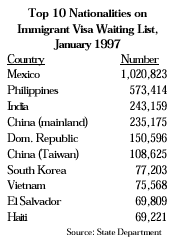
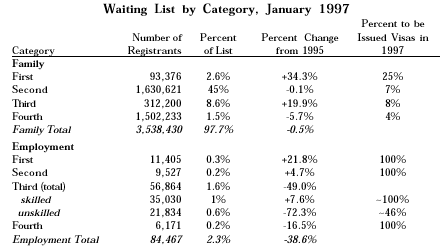
As of January 1997, more than 3.6 million people were waiting to receive an immigrant visa, according to the State Department's annual tabulation released in March. The waiting list consists of individuals who have approved immigrant visa petitions on file, but whose applications cannot be adjudicated because of the statutory limits on most categories of immigration and per-country levels. The 1997 figure is down two percent from 1995. (For reasons that are unclear, State never publicly released its 1996 count. A copy obtained by the Center put the 1996 waiting list for family visas alone at 3.75 million.)
Because the State Department tabulation does not include applicants for adjustment of status — those who are applying from within the United States — it understates the number of people who are actually waiting for green cards. Before 1995, only applicants who were legally present could adjust status (usually skilled employment immigrants); now, under a provision known as 245(i), illegal immigrants can have this expedited processing as well. The next chart shows the State Department's estimates of the percentage of applicants that it believes has taken up residence before being legally admitted.
As of January 1997, the INS had about 473,000 non-refugee/asylum applications in line to be adjudicated. The INS does not provide the statistics by category of application, but it is likely that most of these applicants are immediate relatives of U.S. citizens or permanent residents, most of whom are living here illegally, and employment immigrants, most of whom are in legal status.
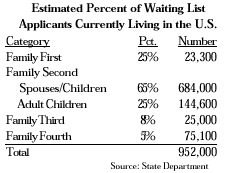
A period of bureaucratic confusion that followed the enactment of 245(i) is likely to have exacerbated the undercount of the waiting list. The legislation resulted in a large shift of workload from the State Department to the INS, which had vastly underestimated the number of people who would take advantage of the program. In the first few months of the fiscal year, the INS accepted tens of thousands more applications than it could process, creating a large backlog. Once an application is accepted for processing, the case will drop off the waiting list, even though it has not yet been adjudicated. This snafu is the most plausible explanation for the significant drop (72%) in the Unskilled Worker category.
Other changes in the list:
- The Family-1st preference category, for adult sons and daughters of U.S. citizens, grew by 34 percent. More than 60 percent of these people are from the Philippines, where there is unusually high demand in this category, amounting to more than 35 times the annual visa availability.
- The Family-2nd list, which includes spouses and children of green card holders, shrank slightly. Many of those qualifying in this category are likely to adjust status, so the total is almost certainly understated. Just over one-half of the list is comprised of Mexicans.
- The Family-3rd preference, for married adult sons and daughters of U.S. citizens, went up about 20 percent, probably due to large numbers of newly naturalized citizens petitioning for these family members.
- The Family-4th category, for siblings of U.S. citizens, declined slightly, probably due to the very long waits in this category. Most of those getting visas now have been on the list since September 1986, except for the Filipinos, who have been on the list since December of 1977. Visas are available to only four percent of the applicants on the list at most, so it is unlikely that this backlog will disappear anytime soon.
[Editor's note: Last year's immigration bill instructed the Attorney General to present to Congress within one year a study of mail-order marriages to determine the number of such marriages, the extent of fraud and domestic abuse, and the need for expanded regulation and education. This article is the Center's small contribution to that effort.]